Written by
Sarah Zeng
Marketing Coordinator
27 March 2026
TL;DR
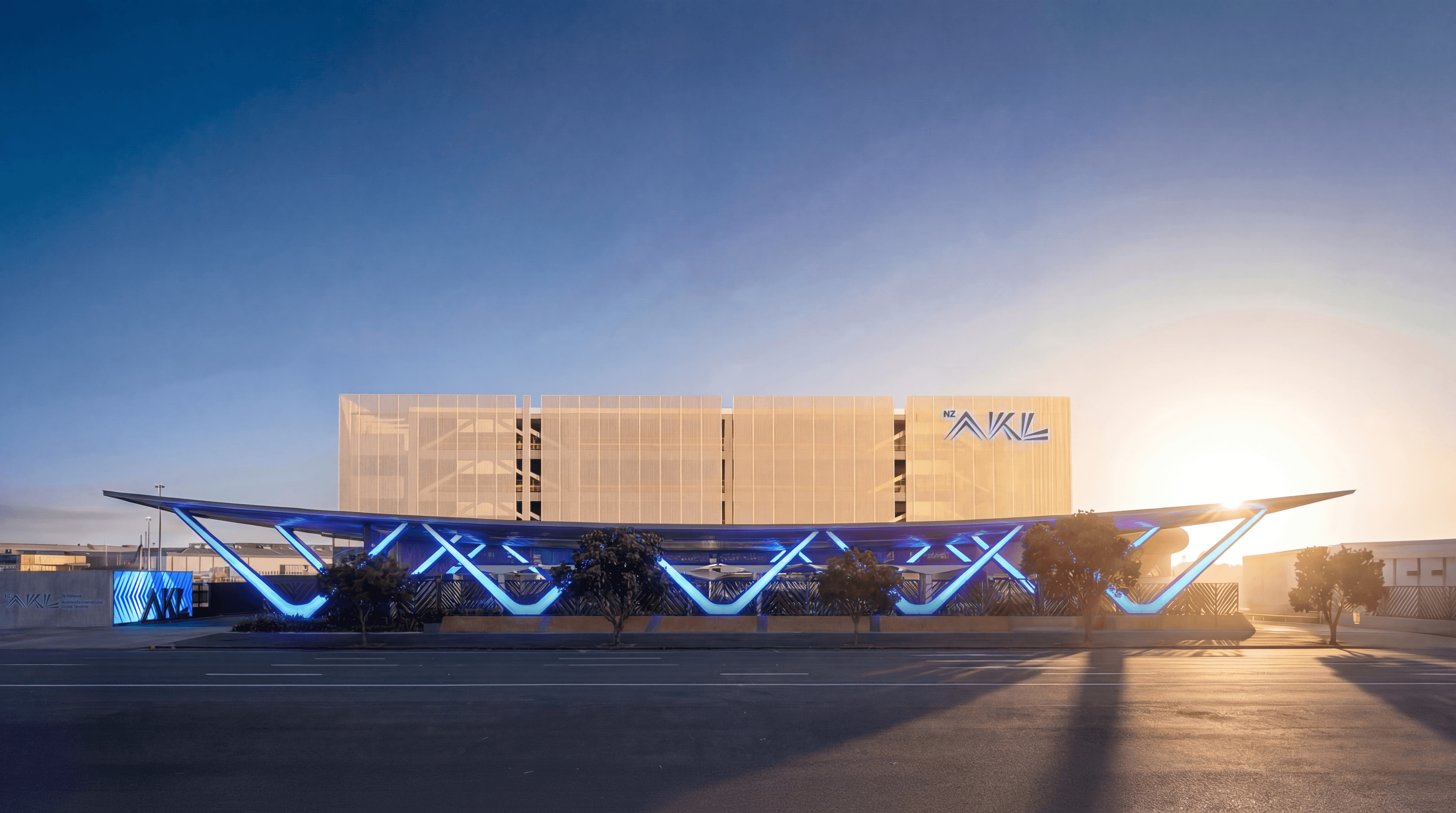
Renoir helped bring Te Waharoa into view before it is built, delivering a cinematic teaser in 10 days, without a single day on location. The result came not from one tool, but from a written brief, clear narrative direction, and a controlled visualisation workflow designed to turn real architectural intent into high-quality public communication.
Some public projects are easy to explain on paper, but much harder to make people feel.
Te Waharoa, the new Auckland International Cruise Terminal, is one of those projects.
It is more than infrastructure. It is part of Auckland’s evolving waterfront story, helping the city welcome visitors more effectively, support local economic growth, and present itself more strongly as a globally connected harbour city.
For this project, Renoir partnered with RCG to help translate real design intent into a visual story people could understand early and engage with confidently.
The result was a 44-second cinematic teaser, built from a written brief, directed through a tightly controlled workflow, and delivered at high quality without a single day on location.
Why visualisation matters on projects like this
Before a public-facing project is built, it has to be understood.
That sounds simple, but it rarely is.
Architectural plans, technical drawings, and even standard renders can explain a lot to project teams, but they do not always help a wider audience connect with the future of a place. They may show what something looks like, but not always how it will feel, how it will be used, or why the design decisions matter.
For a project like Te Waharoa, that gap matters.
In a project this visible, and this public, visual communication becomes part of the work itself.
The goal is not just to document a design.The goal is to make the future easier to see.

Beyond rendering, a more controlled visualisation workflow
If we reduce the conversation to AI versus traditional rendering, we risk misunderstanding what both are actually capable of.
The more important question is how the process is directed, how well it is controlled, and whether it can produce work that remains believable, accurate, and consistent in the real world.
That is where our workflow is different.
Before any tool was opened, the brief was already doing the work. We had a written narrative structure in place before a single prompt was written, grounded in Auckland’s real land, harbour, and waterfront, unfolding from night through to sunrise, with carefully placed human presence bringing emotion to the story while keeping the overall tone restrained.
Our process begins with real design material, real project constraints, and real architectural intent. The 3D model provides the structural truth of the project, and from there our visualisation workflow builds upward, combining traditional methods, AI-assisted processes, creative direction, editorial judgement, and care and craft to deliver high-quality results.
That means speed, but not at the expense of control.
It means atmosphere, but not at the expense of accuracy.
It means a faster path from concept to communication, while still preserving the details that matter.
From structure to storytelling
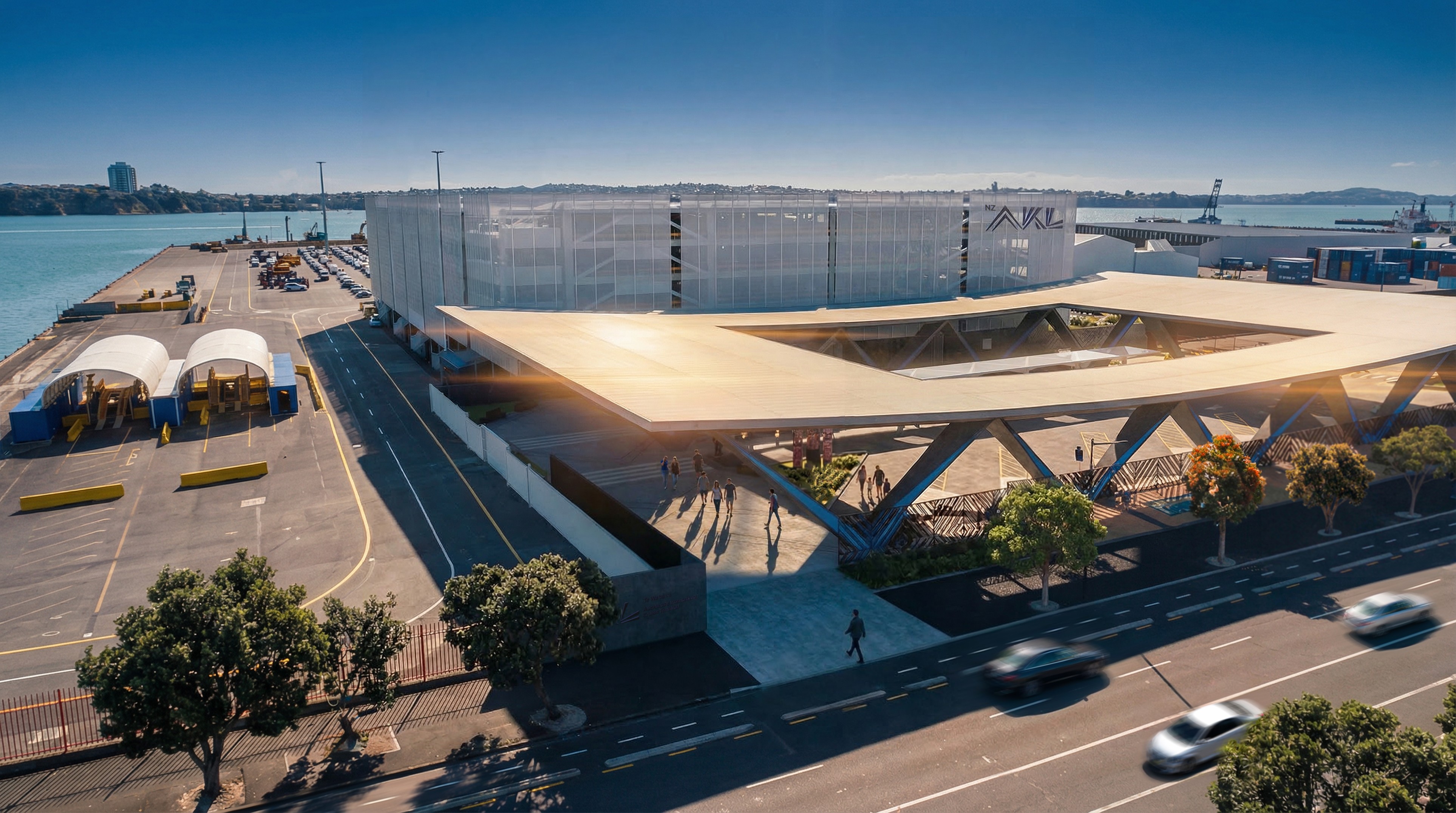
The more relevant question is not whether AI visualisation looks different, but whether it adds real value to the way architecture is communicated. For us, that value lies less in style, and more in translation, helping turn design intent into imagery that is clearer, more engaging, and easier to understand.
The film follows a single morning, moving from night through to sunrise, taking in the terminal’s structure, the wider waterfront, and the people who will eventually move through the space.
The base of the work still comes from the project itself, its form, its proportions, its intended materiality, its location, and the design logic behind it. AI is then used carefully to enrich the image, strengthen the cinematic feel, improve legibility, and help the story land more clearly.
That does not happen automatically.
It takes iteration, quality control, creative direction, and editorial judgement throughout the process. That means working around hallucinations, refining details, checking references, and making sure the output still aligns with what is actually being proposed.
What made this project a good fit for our process
Te Waharoa was the kind of project where communication mattered as much as image quality.
The brief was not only to produce visuals that looked impressive. It was to help express the future of a public-facing place in a way that felt real, accessible, and easy to understand.
That meant finding the right balance between realism and emotion.
Too technical, and the public struggles to see how the project relates to them.
Too stylised, and the realism starts to slip, taking trust with it.
Too generic, and the space becomes harder to connect with in any meaningful way.
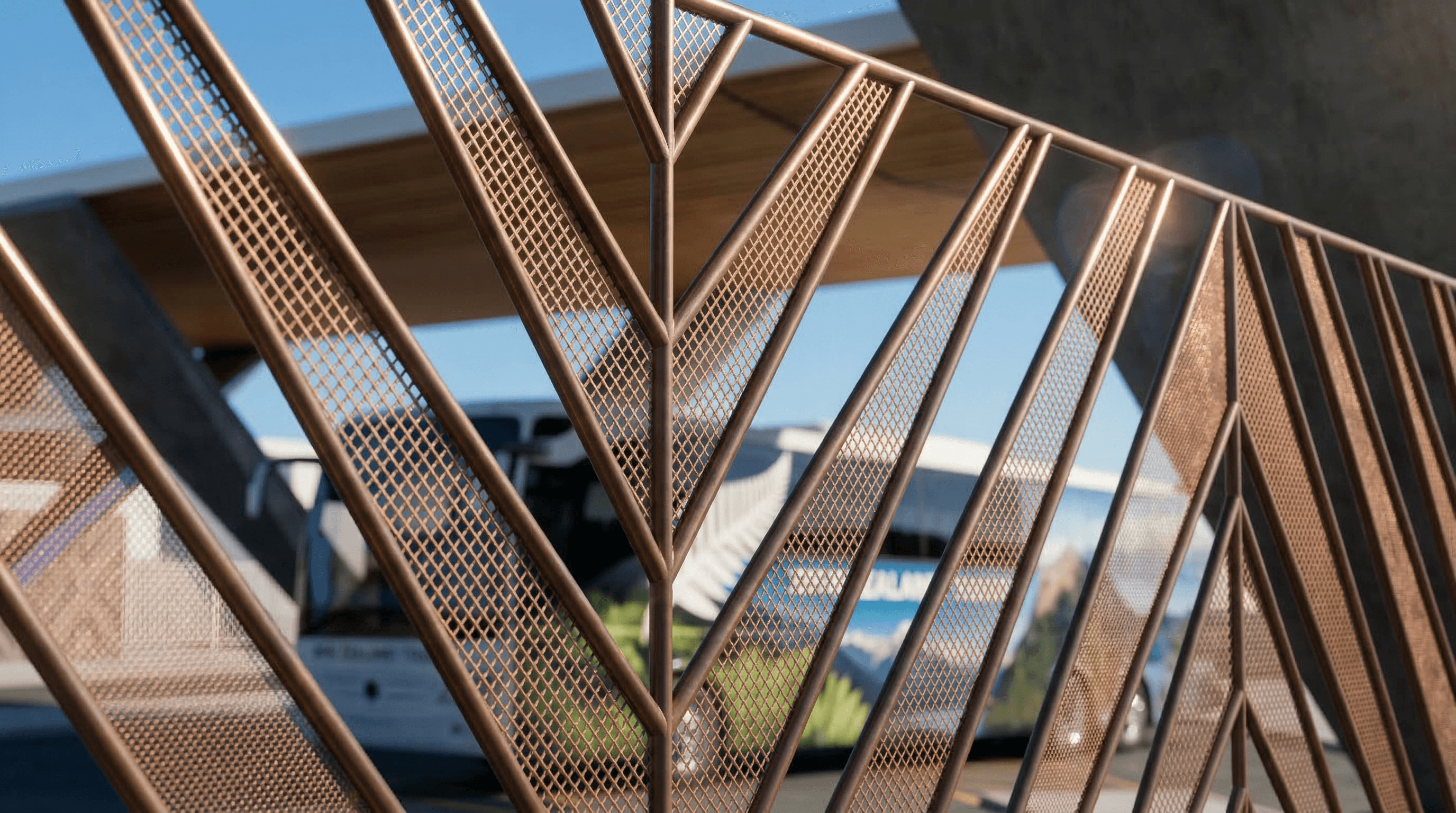
Our process sat in that middle space, using real design material as the anchor, then building atmosphere, motion, and clarity around it so the final film could carry both information and feeling.
That balance is what made the visual story work.

What 10 days actually proved
What matters here is not speed in the abstract, but what speed made possible.
In just 10 days, we delivered a piece of visualisation with visible quality, the kind that can be judged with the eye, not just claimed in a sentence. For us, that is where the value of the workflow becomes real.
Reaching that level of quality at that pace does not come from a single tool, or from AI alone. It comes from control. It comes from taste, professional design experience, creative direction, editorial judgement, and the ability to manage more than eight connected workflows across more than ten different tools.
It also comes from working with these systems every day, understanding where they break, where they drift, where they need correction, and how to keep the final output consistent, accurate, and strong.
That is what makes this workflow valuable. Not just that it moves fast, but that it can move fast without letting quality slip.
For a real project, with real design intent, real public visibility, and real expectations around trust, that kind of control is what turns speed into something meaningful.
What matters beyond the tools
People often turn conversations like this into conversations about tools. But tools alone are never the reason a project is communicated well.
What gives the work its meaning is the thinking behind it, and the chance to help communicate something real with clarity and care.
We are proud to have supported RCG on Te Waharoa, a significant public project for Auckland, shaped by real architects, real design intent, and a real city context.

We can help you!

